Sunday, August 12, 2012

Fostering the Gift of Curiosity

By: Judi Stuart
Port Discover - Visitor Services Manager

Fostering the Gift of Curiosity

You can see it in their eyes. It sparkles and lights up their faces. It’s curiosity, and it must be cultivated and nurtured, or it will dim.

Eleanor Roosevelt said, “...at a child’s birth, if a mother could ask a fairy godmother to endow it with the most useful gift, that gift would be curiosity.” Curiosity might be the mother of invention, but it is also the mother of learning.

Some children seem to lose some of their drive to learn and explore as they approach the middle school years, and teachers and parents become anxious to get back that childhood enthusiasm for learning. Where did it go?

Many books have been written, teaching techniques explored, and countless hours of research spent in the quest for the answer to what keeps the desire for learning at its peak.

Of course, there is no simple answer, but after many years of teaching, I believe that parents and teachers must continuously act as facilitators for learning. They should be relentless in their efforts to follow the interests that the child expresses and to provide materials and experiences in those particular areas of interest.

A child can be his own best teacher.

Childhood is full of opportunities for exploration through toys, games, books, movies, television, and countless child centered activities. Places like the Museum of The Albemarle, Arts of the Albemarle, and Port Discover are settings where kids can experiment and find their personal interests.

For all of the criticism directed at media, they also provide many golden sparks for kids’ curiosity. Finding Nemo, the Ice Age series, Madagascar series, Wall-E, Lorax, Rio, Bambi, and 2001, A Space Odyssey all cause kids to wonder about the world of science.

Although the science is not always the most accurate in such programs as “Sponge Bob” and other cartoons, they still might cause the child to ask questions and become interested.

That’s when the parent can seize the opportunity to acquire books, magazines, and materials from the library, take the child on to a museum or science program, or just probe for questions that the child might be wondering about and try to answer them together.

One activity that can be helpful is regularly discussing current science events. Just this summer, there have been so many topics to explore like global warming, drought, flooding, space exploration, archeological discovery, and the list goes on and on.

My newest discovery is www.neok12.com which is a treasure house of free online videos, lessons, quizzes, games, and puzzles for kids, teachers, and parents. Organizations such as the British Broadcasting Company offer documentaries on a variety of topics such as prehistoric America, dinosaurs, and the Ice Age.

Remember that a child’s first question is usually “Why?” As their first teacher, you can easily become equipped with all that you need if you look around. You will probably learn something together, and that’s the fun of it.

###

Friday, August 3, 2012

Dragon in the House

By: Judi Stuart
Port Discover - Visitor Services Manager

Dragon in the House

Just when you think life can’t get any more interesting, something new comes along. This time it’s a lizard, a Pogona vitticeps, to be exact, otherwise known as a Bearded Dragon. The Australian native is normally a terrestrial, desert-dwelling lizard, but he also makes a wonderful pet.

Recently our two pet rodents, Squeakers and Lilly, departed this world, so we wanted to replace them. While having that conversation, we decided that it would be a good time to add to our species at the center.

We had many ideas, but acquiring a bearded dragon seemed to be the best prospect. We had the aquarium, a window that needed changing, and the knowledge about how to take care of the new animal.

One trip to the pet store, and he was ours. Our new pet is three years old and is accustomed to being held. We also got two young female rats which had been slated to be dinner for the snakes at the pet store. Saving them from that awful fate was an added benefit for us.

Bearded dragons are probably one of the few reptiles that can be tolerant of being handled by humans, which was a requirement for us because we wanted to be able to use it in some of our programs. Our new pet is three years old and is already accustomed to being held.

We are having a naming contest for the dragon, and visitors can vote for the names Angus, Edmund, Burnie, Heath, or Bruno which are all common Australian names. The name with most money in the jar will be the winner.

Both male and female lizards from “down under” have an expandable throat pouch with spiky scales that look like a beard when they are inflated for mating and aggression displays. Their body color depends on the soil in the region where they reside. Ours is a gold and light orange combination.

Our “beardie” is about a foot long and likes to spend long hours stretched out sunning himself in the window. He is furnished with his favorite foods, crickets and veggies from our garden.

Australia has not allowed the export of any native wildlife since the 1960s, so our pet was probably born in this country. Their pleasant disposition and manageable size make bearded dragons popular pets. In the wild, their enemies are primarily snakes and kookaburras.

We plan to design a habitat for him in the front window where he can be seen by people walking by and where he can also enjoy basking in the sunlight. Already people are enjoying watching him from the sidewalk.

The jars are filling up with votes and the favorite name appears to be Bernie so far, but things might change as time goes by. Personally, my choice would have been Dundee (Crocodile Dundee).

Come in soon to meet our new friends and vote for a name you like.
###

What do you think our bearded dragon's name should be? -- Cast your vote in the unofficial poll -- HERE

Thursday, July 19, 2012

Watch Out for that Plant!

By: Judi Stuart
Port Discover - Visitor Services Manager

Watch Out for that Plant!

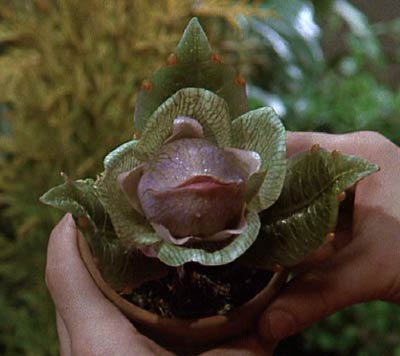
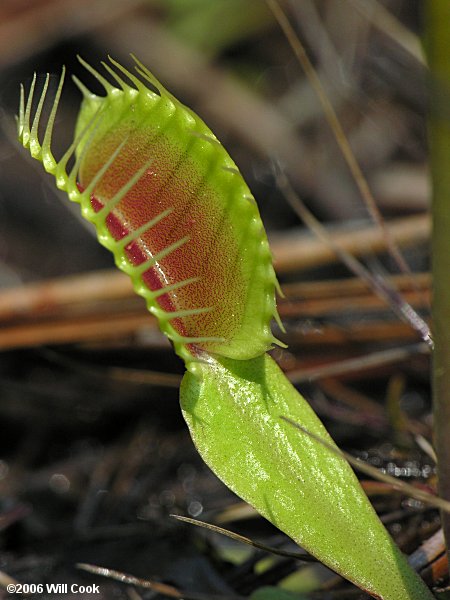
The 1960 movie Little Shop of Horrors became a cult classic, and in 1986, it became a Broadway musical by the same name. Audrey 2, the featured creature, was modeled after the famed North Carolina plant, the Venus Flytrap.

Any child who has ever examined the Venus Flytrap will convince you that the plant has a demonic mind that makes it capture insects and eat them. The fictional Audrey 2 re-enforced that concept when she could only be fed with blood in order to survive.

In reality, the Dionaea muscipula is classified as a carnivorous plant that catches and digests animal prey through the use of sensitive hairs that trigger the plant to close its leaves. Digestion provides nutrients that the plant needs.

The native plant is found only in North and South Carolina bogs and wetlands within a 60-mile radius of Wilmington, NC. Other places have managed to cultivate the flytrap which thrives where the nutritional poverty of the soil is severe. They are generally difficult to grow and take up to five years to mature into a healthy plant.

Other plants have human characteristics that are intriguing. Ancient Greeks studied these types of plants, and during the 19th century, scientists actually thought the some plants had nerve and muscle tissue similar to that of animals.

We were visiting the Farmers’ Market in Raleigh a few weeks ago. Full of vegetables and plants of all types, it is one of my favorite places to visit. I always learn something and never leave empty handed.

My husband reached over and touched one of the small plants sitting on the shelf where we were browsing. Instantaneously, the plant folded its leaves toward each other, seemingly in an effort to protect itself from the invader. I was startled. The plant was a Mimosa pudica or mimosa plant which had leaves similar to those found on the mimosa tree.

Other species known by names such as the sensitive plant, tickle-me-plant, touch-me-not, and the humble plant fascinate people with their ability to move. Although we were taught that only animals can change location, some plants seem to move when stimulated by touch, light, or gravity.

Some plants have a survival reaction that causes them to droop, therefore making themselves look unattractive when stimulated by a possible predator that might want to eat them. Phototropism is growth toward light which occurs because the tips of the plant have a pigment that is sensitive to light.

Simply put, the cells in plants undergo changes because of a plant hormone which activates modifications in the plant cells themselves, or they move because of sensors in the plant.

If you would like to study more diagrams and explanations, Bernie’s Basics at www.abc.net.au has lots of detailed information about the plant movement topic.

Watch out for those plants because they might be watching you!
###
Related Posts Plugin for WordPress, Blogger...