Monday, June 4, 2012

Chemistry in a Glass

By: Judi Stuart
Port Discover - Visitor Services Manager

Chemistry in a Glass

Sodium is poisonous and so is chlorine, but if you put them together, they become sodium chloride, or salt, a substance both beneficial and desirable to humans and animals. Chemistry is amazing!

Thomas Jefferson wrote about wanting to see “chemistry applied to domestic objects...making cider, to fermentation and distillation generally, to the making of bread, butter, cheese, soap to the incubation of eggs...”

In 2005, author Tom Standage penned the book A History of the World in 6 Glasses. He writes about 6 beverages that he thinks have shaped the world from early times to the present. The book is a fascinating examination of the creation of beer, wine, spirits, coffee, tea and coca-cola and how they have affected peoples’ relationships as well as their productivity.

When early humans first began to stop their nomadic lifestyle between 10,000 and 15,000 years ago and settled down to farm, grain was among the first crops. Sumerians may have discovered the fermentation process when the wet grain produced an inebriating pulp. Fermentation is the chemical conversion of glucose found in the grain into ethyl alcohol. With the use of yeast, mold, or other enzymes the process became more elaborate and beer was the result. In Ancient Egypt, the workers that built the pyramids were probably paid with jugs of beer.

Paleolithic humans may have discovered wine when they sampled naturally fermenting wild grapes. Early use of wine was associated with religious activities. Areas like Greece and Rome where people cultivated grapes became the center for the production of the sought after drink.
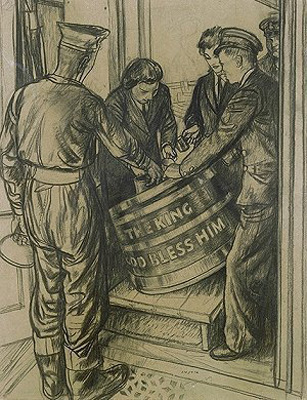
Spirits or hard liquor which developed later was given to sailors during long sea voyages in the 15th, 16th and 17th centuries. Great Britain mandated the drinking of grog made with rum, water and lemon or lime juice. The concoction actually reduced illness and scurvy. The policy may have been partly responsible for Britain’s superiority on the sea.

On the Arabian Peninsula, roasted beans were first brewed and made into coffee which later spread throughout the Arab world. Coffeehouses took the place of taverns because Islam banned alcohol but allowed the stimulating drink of coffee. The famous Lloyds of London and the London Stock Exchange were both originally coffeehouses.

Although the drinking of tea started around the third century A.D., it quickly flourished as a caffeinated afternoon pick-me-up in the industrial world. The beneficial aspect that it was brewed with water purified by boiling added to its use in highly populated areas.

Pharmacist John Stith Pemberton created Coca-Cola in 1886, and today though somewhat different from the original, it stands as a symbol of America as an economic superpower around the world.

The chemical reactions required to make these six beverages have in some ways shaped the world. On June 7 Port Discover will focus on the Science of Beer during its fundraiser, “Summer Brew-Balloo.” Check the website, www.portdiscover.org for more information and for tickets.

Monday, May 21, 2012

Mother Vine Lives On

By: Judi Stuart
Port Discover - Visitor Services Manager

Mother Vine Lives On

A mother’s influence spreads far beyond her expectations or understanding. In the case of the Mother Vine of Roanoke Island, her tendrils have wound through 400 years of American history and botany.

Explorers Amadas and Arthur Barlowe may have been the first colonists to see what is believed to be the oldest cultivated grapevine in the nation. The huge scuppernong vine, a type of native muscadine, came to be known as the “mother vine” long ago and helped give birth to the 175-year-old wine industry of North Carolina. Many people consider the venerable plant to be a symbol of North Carolina heritage.

Local folklore tells of its fictional origin. In the story, beautiful Virginia Dare, the first English child born in the New World, lived to adulthood and fell in love. Another suitor was jealous, and the result was the tragic death of the young maiden.

As her lover carried her back to her original home to bury her, wherever drops of her blood touched the ground, vines filled with red grapes sprouted. From the spot where she was buried, came the Mother Vine which produced a sweet fruit unlike any other.

Scuppernong, a Washington County town, is named for the many cuttings that the settlers took from the Mother Vine during the colonial period. More than twenty varieties have been cultivated which produce both red and white wines.

Always famous for its scuppernong wine, NC was listed as the number one wine producer in the 1840 Federal Census and even now ranks in the top 10. As recently as 2008, Duplin Winery began bottling The Mother Vine white table wine which is the first wine in more than 100 years to be produced from a cutting of the native vine.

Recently, resveratrol, antioxidants, and other chemicals found in the grapes have been credited with clearing arterial walls and inhibiting cancerous tumor growth, thus increasing the wine’s popularity. For teetotalers, wineries also make undistilled juices, jams and sauces from the grapes.

The agricultural world trembled when in 2010 an accidental spraying of herbicides threatened to bring an end to the old lady.

Jack Wilson, owner of half of the vine for more than 52 years, was the first to notice the browning of the plant. Experts were summoned, and after careful study, they recommended cutting back the vine severely and applying lots of water and fertilizer to stop the herbicides from spreading to the two foot wide trunk and roots.

The plan worked. After careful treatment, the Mother Vine seems to have weathered one more storm. Monitoring will continue for several years.

The vine’s green canopy, now 32 feet wide and 120 feet long is supported by a system of posts and arbors. Passersby are often gifted with clusters of grapes from the vine to enjoy.

As with all life, the Mother Vine will continue to spread her influence throughout generations who care for and admire her.
###

Monday, May 7, 2012

Entertaining Tenants

By: Judi Stuart
Port Discover - Visitor Services Manager

Entertaining Tenants

They’re back! Our warm weather tourists from Brazil spend their days singing, swooping, and soaring through the sky above their house in our yard. Finally, they have returned to spend another season with us. We are delighted, and we take our job as purple martin landlords seriously.

Preparation for their arrival began months ago. It was determined after much research by hubby that the martin house that they lived in last year was not up to the high standards these birds deserved.

He redesigned the apartments to be larger allowing for more babies and reconstructed it so that the house could be lowered for inspection and cleaning. Finally, gourds were installed on a separate branch to give the parents additional choices for nesting.

One day, I noticed that my prized Bose radio had disappeared. It seems that purple martins can be attracted by playing recordings of martins singing their dawn song. Hubby had rigged the music to blast forth every morning at 4:00 am through the guest room window facing the martin house.

We have the Native Americans to thank for actually changing the martins’ nesting habits over thousands of years by first providing them hollowed out gourds for nesting. Previously the birds were cavity nesters using crevices such as old woodpecker nests, dead trees, cliffs, or boulders. Now, they are dependent on man to provide their housing.

Indians must have developed a special respect for these glossy, deep blue creatures with forked tails because of their beauty and their skills. Besides a passion for eating thousands of mosquitoes, beetles, flies, dragonflies and moths, they begin their bubbling chirps and trills early in the morning serving as natural alarm clocks.

They also acted like scarecrows chasing away crows from the corn patches and vultures away from the meat, which had been hung to dry. Today, they are prized for their entertainment value and their love of people.

Purple martins like their houses mounted 15 to 20 feet above the ground and 100 feet from human dwellings. They prefer broad open areas with 40-50 square feet of clearing.

Martins use mud, leaves, grass, and feathers for their nests and appreciate crumbled eggshells spread on the ground as a source of extra calcium. A supply of fresh water is also important.

One of the best sites for learning about purple martins is www.purplemartin.org, which is a product of the Purple Martin Conservation Association. You can also order supplies to get yourself started in becoming a landlord for these special creatures.

If you’d like a spectacular experience with nature, drive to the William B. Umstead Memorial Bridge crossing the Croatan Sound in Dare County. Every evening from mid-June to mid-September, 100,000 martins converge on the bridge to roost. It is a breathtaking sight. The Coastal Carolina Purple Martin Society provides a site www.purplemartinroost.com where you can find information.

Establishing a relationship with one of nature’s amazing entertainers is a priceless experience. Try it. You’ll both benefit.
###
Related Posts Plugin for WordPress, Blogger...