Sunday, July 1, 2012

Water, Water Everywhere

By: Judi Stuart
Port Discover - Visitor Services Manager

WATER, WATER EVERYWHERE

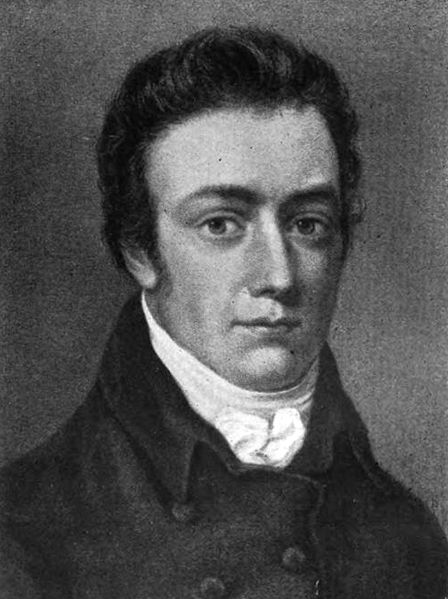
Samuel Taylor Coleridge wrote about being on a ship surrounded by water, but not being able to drink it in his poem “Rhyme of the Ancient Mariner.” Although that is a work of fiction, for many people of the world, the water that is around them is unfit to drink.

That situation is impossible for most of us to imagine. We might complain about our water bill or prefer bottled over water from the tap, but the acquisition of water is not on our list of concerns. We treat water as if it were an unlimited resource. It’s not.

For 1.1 billion people, access to safe drinking water is only a dream, and by 2025 by some estimates, two thirds of the world’s population will live in countries with moderate to severe water shortages. Currently more than 5 million people per year die from water related diseases. Eighty percent of diseases found in third world countries are related to the lack of safe drinking water.

Earth rarely looses or gains water. The same water that was here millions of years ago is still present today. Water is a finite resource whose usage is increasing with population growth.

In Mozambique, the average person uses less than 10 liters of water per day, while an American uses 575 liters per day. A woman in some countries spends an average of four hours per day moving 100 kg of water over many kilometers to meet the needs of her family.

Time spent in fulfilling basic needs takes away from time that could be used for education or cultural advancement of the society.

In the United States, forty percent of the waterways are unsuitable for fishing, bathing, or drinking. Even worse, in developing countries ninety percent of sewage is dumped untreated into bodies of water.

Eight-five percent of Americans depend on public water sources while fifteen percent get their water from private sources such as wells. It seems incomprehensible that it takes 2,400 liters of water to make a single hamburger from the birth of the steer to the serving of the meal.

Likewise, we put golf courses in the middle of deserts and then pipe water out to meet their needs. In bottling 89 billion liters of water each year, we throw away 1.5 million tons of plastic, while studies show that water from the tap is just as safe as bottled water.

What can be done? Will the planet’s water issues eventually lead to violent conflicts? Will water take the place of oil as the most sought after commodity? Can we do anything to stop the problems that have been identified?

Clearly, we all must act more responsibly, or the fate of the human race may be in danger. If you would like to understand the problems, organizations like One Drop (www.onedrop.org) and All About Water (www.allaboutwater.com) will amaze you with information you can use.

###

Monday, June 18, 2012

Thanks to Shakespeare

By: Judi Stuart
Port Discover - Visitor Services Manager

Thanks to Shakespeare

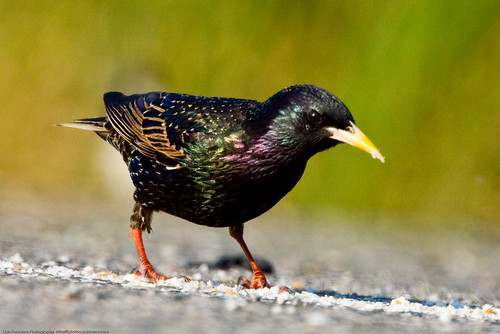
It sounds too far-fetched to be true. Sixty birds evolved into a population that now out-numbers the humans in the United States--and all because of Shakespeare. Plus, they don’t have many human fans.

In 1890, an eccentric American named Eugene Schieffelin had a dream of bringing all the birds that Shakespeare mentioned in his literary works to North America. He decided to release 60 starlings into Central Park in New York City. The next year he released 40 more.

Shakespeare included over 50 species of birds in his plays and poetry and probably used more references to birds than any other writer. They included everything from ospreys to crows. In his play Henry IV the bard wrote about starlings’ ability to mimic the human voice.

During the 1800s there were many societies formed that wanted to bring species of plants and animals to America that reminded them of home in Europe and other places. The result was that many of them became invasive and eradicated native plants and animals.

From Schieffelin’s effort, we now have over 200,000,000 starlings that threaten several species of birds, devastate crops, and destroy property across the continent. Bluebirds, woodpeckers, and purple martins have been the most affected of the cavity-nesters.

My nature loving, purple martin landlord husband never kills a living thing, but starlings are the exception to the rule. Even though he’s convinced his only way into heaven is his life-long commitment to saving bugs and other animals from death, he kills starlings.

After happily counting thirteen eggs laid in his purple martin house, he discovered that starlings had killed some adults and broken the eggs. That was the day he declared war on the aggressors. Since starlings return to nesting places year after year, it is especially important to stop their nesting as quickly as possible.

In some parts of the country, starling traps made to look like martin houses yield piles of victims which are then gassed. Across the nation, wildlife services estimate that more than a million a year are killed. Dairy farmers who do not cover their piles of cattle food attract starlings. Wildlife enthusiasts, hoping to attract other species such as wood ducks, have taken to shooting and trapping the birds.

Control of the starlings is mandatory if bluebirds and purple martins are to be protected and remain as part of the wildlife population. Eliminating the starling is probably impossible, but lowering the $800,000 in crop damage done annually is an important goal.

Like all things, starlings have served a purpose. In Washington State where the comeback of the peregrine falcon since stopping the use of DDT has been studied, starlings play a helpful role. They are prey for the falcons and help to sustain them. Amazingly, some people even keep starlings as pets.

Often, nature reminds us that there is a purpose for everything.

###

Monday, June 4, 2012

Chemistry in a Glass

By: Judi Stuart
Port Discover - Visitor Services Manager

Chemistry in a Glass

Sodium is poisonous and so is chlorine, but if you put them together, they become sodium chloride, or salt, a substance both beneficial and desirable to humans and animals. Chemistry is amazing!

Thomas Jefferson wrote about wanting to see “chemistry applied to domestic objects...making cider, to fermentation and distillation generally, to the making of bread, butter, cheese, soap to the incubation of eggs...”

In 2005, author Tom Standage penned the book A History of the World in 6 Glasses. He writes about 6 beverages that he thinks have shaped the world from early times to the present. The book is a fascinating examination of the creation of beer, wine, spirits, coffee, tea and coca-cola and how they have affected peoples’ relationships as well as their productivity.

When early humans first began to stop their nomadic lifestyle between 10,000 and 15,000 years ago and settled down to farm, grain was among the first crops. Sumerians may have discovered the fermentation process when the wet grain produced an inebriating pulp. Fermentation is the chemical conversion of glucose found in the grain into ethyl alcohol. With the use of yeast, mold, or other enzymes the process became more elaborate and beer was the result. In Ancient Egypt, the workers that built the pyramids were probably paid with jugs of beer.

Paleolithic humans may have discovered wine when they sampled naturally fermenting wild grapes. Early use of wine was associated with religious activities. Areas like Greece and Rome where people cultivated grapes became the center for the production of the sought after drink.

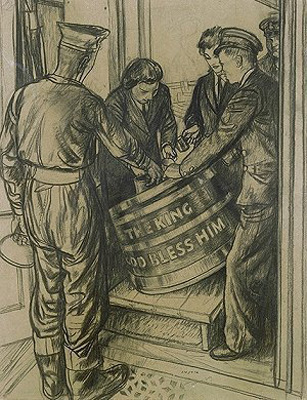
Spirits or hard liquor which developed later was given to sailors during long sea voyages in the 15th, 16th and 17th centuries. Great Britain mandated the drinking of grog made with rum, water and lemon or lime juice. The concoction actually reduced illness and scurvy. The policy may have been partly responsible for Britain’s superiority on the sea.

On the Arabian Peninsula, roasted beans were first brewed and made into coffee which later spread throughout the Arab world. Coffeehouses took the place of taverns because Islam banned alcohol but allowed the stimulating drink of coffee. The famous Lloyds of London and the London Stock Exchange were both originally coffeehouses.

Although the drinking of tea started around the third century A.D., it quickly flourished as a caffeinated afternoon pick-me-up in the industrial world. The beneficial aspect that it was brewed with water purified by boiling added to its use in highly populated areas.

Pharmacist John Stith Pemberton created Coca-Cola in 1886, and today though somewhat different from the original, it stands as a symbol of America as an economic superpower around the world.

The chemical reactions required to make these six beverages have in some ways shaped the world. On June 7 Port Discover will focus on the Science of Beer during its fundraiser, “Summer Brew-Balloo.” Check the website, www.portdiscover.org for more information and for tickets.
Related Posts Plugin for WordPress, Blogger...